


Launching a Podcast to Spotlight Rochester NY Theater and Arts

Sometimes the best next step is not the one you planned first.
After the critical success of THE DRESSER, which ended about a month ago, our focus turned to the future. The next productions we hope to bring forward, depending on rights, are THE CRIMSON THREAD by Mary Hanes, DIVERSIONS & DELIGHTS by John Gay, and EQUUS by Peter Shaffer.
That planning is already underway. Scripts are being broken down. Props are being listed. Set needs, costumes, furniture, cast size, and technical demands are all being studied line by line. At the same time, we are looking for performance spaces in the Rochester, NY area.
That search has taught us something important. Rochester has a lot of theater. More than expected. More than enough to prove that the arts are alive here.
It has also shown us a gap.
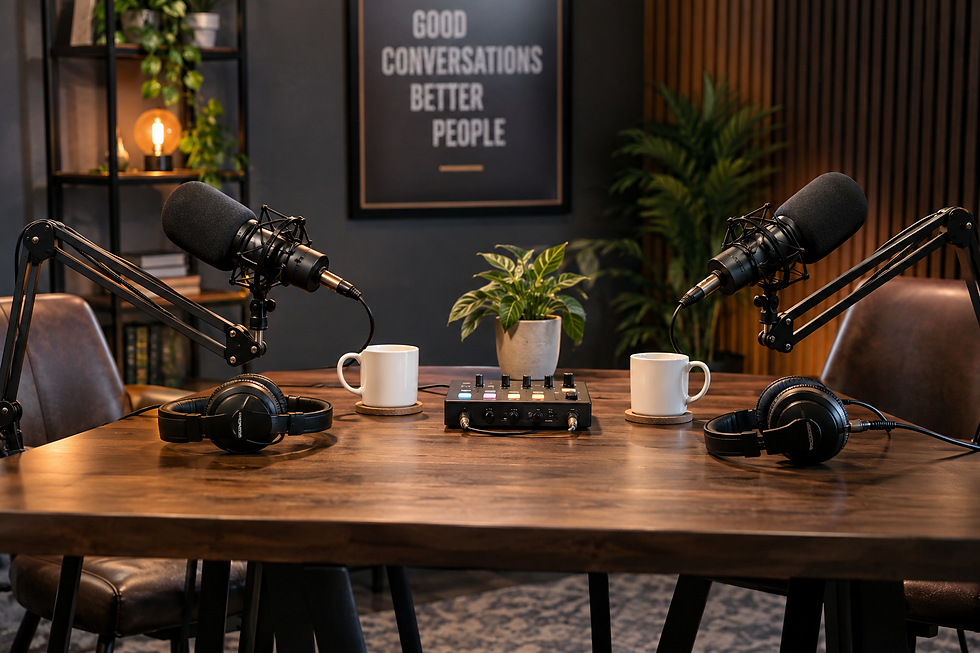
Many strong productions open, run, and close without the audience they deserve. So while we continue preparing for our own next shows, another idea has started to take shape: a podcast focused on the local arts scene.

The work after THE DRESSER has already begun
A successful production brings a special kind of energy. It also brings responsibility.
When a show like THE DRESSER connects with audiences, the obvious question comes quickly: what comes next?
The answer is not as simple as picking a title and announcing dates. Every production has its own needs. Some are small on the surface but demanding in detail. Some require the right actor at the right moment. Some need a flexible space. Some need a particular intimacy between performer and audience.
Right now, we are doing the practical work that makes a future production possible.
That means reading each script with a pencil in hand and asking basic but essential questions:
How many actors are needed?
What props are essential to the story?
What kind of furniture must be found or built?
How simple or complex does the set need to be?
What costumes are required?
What are the technical needs?
What kind of space will serve the play best?
This is not glamorous work, but it is the foundation. A production can only feel effortless to an audience when the preparation has been careful.
THE CRIMSON THREAD, DIVERSIONS & DELIGHTS, and EQUUS each ask different things from a company. They do not all live in the same kind of room. They do not all speak to audiences in the same way. That is part of the excitement, and part of the challenge.
Rights also matter. Until rights are secured, plans remain plans. That is the honest place we are in now. We are preparing as much as we can while respecting the process.
Rochester has more theater than expected
When I first moved to the Rochester area, I had a real concern. I wondered if there would be enough theater here.
That fear did not last long.
There is, in fact, a great deal happening. On many weekends, audiences can choose from multiple productions. Some are staged by established companies. Some come from smaller groups. Some are in traditional theaters. Others appear in churches, community rooms, schools, black box spaces, and unexpected corners of the city and surrounding towns.
Several productions we have seen have been superbly directed and performed. The level of care has been encouraging. It is always heartening to sit in an audience and feel that everyone involved has taken the work seriously.
That does not happen by accident.
Theater requires people who will give time, skill, patience, and often a great deal of unpaid labor simply because they believe the work matters. Rochester has many such people. Directors, actors, designers, stage managers, technicians, volunteers, and loyal audience members are all part of that ecosystem.
The surprise was not just that theater existed here. The surprise was how much of it existed.
That is good news. It also creates a practical problem.

Finding a performance space is its own production
A full arts community means more competition for space.
That is healthy in one sense. It means theaters are active. It means rooms are not sitting empty. It means people are making work.
For a producing group, though, it can be difficult.
Many spaces are booked a year in advance. Some are even harder to secure during desirable parts of the season. A company looking for a good performance home has to think beyond availability. The space has to fit the play, the audience, the budget, and the calendar.
Timing matters as much as location.
No one wants to open a show when audiences are away, distracted, exhausted, or pulled into major holidays. A strong production can struggle if it lands during the wrong week. The goal is not only to find a stage. The goal is to find the right stage at the right time.
That search continues.
While it continues, we will use the time well. There is no reason to sit still. A delayed production schedule can become a better-prepared production schedule.
More preparation now can mean:
Cleaner budgets
Better casting plans
Stronger designs
More focused rehearsals
Clearer production calendars
Better communication with audiences
That is the practical side of patience. If the room is not yet available, the work can still move forward.
The arts need more ways to be seen
The search for space has also made something else clear. Rochester does not suffer from a lack of art. It suffers, at times, from a lack of visibility.
Many shows go up and do not get the attention they deserve. This is not unique to Rochester. It is a problem in many cities.
Print coverage has changed. There are fewer arts pages than there used to be. Fewer critics. Fewer preview pieces. Fewer long features about the people making work in the community.
Local television stations can and do help with promotion. That matters. A short segment can bring attention to a show that might otherwise go unnoticed.
But television cannot cover everything. Print cannot cover everything. Word of mouth helps, but it often reaches the people who are already paying attention.
That leaves a gap between the amount of work being made and the number of people who know about it.
A podcast may help fill part of that gap.
Not replace critics. Not replace newspapers. Not replace television. Just add another path.
That is the heart of Launching a Podcast to Spotlight Rochester NY Theater and Arts. The purpose is simple: help more people hear about the work happening around them.

What the podcast could become
The podcast idea is still taking shape, but the need feels clear.
A local arts podcast could give time and space to productions that rarely receive long-form attention. It could let artists speak in their own voices. It could help audiences discover shows before they close.
The format does not need to be complicated. In fact, it should not be.
A useful arts podcast could include:
Conversations with directors about why they chose a play
Interviews with actors about building a role
Short previews of upcoming productions
Reflections on what makes a particular venue special
Discussions with designers, stage managers, and technicians
Episodes about music, visual art, dance, readings, and other local work
Occasional updates on our own productions and planning
Where people can learn acting, or painting or the other arts.
Discussions of Local Restaurants and Other Popular Sites in the Rochester NY area favored by the creatives who appear on the show.
Listings of upcoming projects, sent in by various groups to be mentioned on air.
The best version would be generous. It would not exist only to promote one company or one kind of theater. Rochester’s arts community is broad, and the podcast should reflect that.
There is room for serious theater.
There is room for comedy.
There is room for new work, classic work,
music,
staged readings,
student productions,
and small experiments that may only run for one weekend.
Some of the most meaningful performances happen without much noise around them. A podcast can slow down enough to say, “Here is something worth noticing.”
Coverage is different from criticism
One reason this idea feels useful is that arts coverage and arts criticism are not the same thing.
A review has its place. At its best, criticism can be thoughtful, informed, and fair. It can place a production in context and help artists see their work from another angle.
But coverage has a different purpose.
Coverage says:
This is happening.
These people are making it.
This is why they care.
This is where and when audiences can see it.
This is what the work is asking or exploring.
That kind of attention can help audiences decide what to attend before the show is gone.
Many productions have short runs. If a show opens Friday and closes Sunday, waiting for a traditional review may not help much. By the time people hear about it, the opportunity may already be past.
A podcast can be more flexible. It can record ahead of an opening. It can release a short episode in time to make a difference. It can create an archive, too, so the work is not forgotten after closing night.
That archive matters. Theater is temporary by nature. Once the final performance ends, the set comes down, costumes are stored, props are returned, and the room becomes something else.
A recorded conversation keeps some part of that work alive.
The podcast should serve the whole room
If this podcast moves forward, it should not only focus on the people under the lights.
Actors and directors often receive the most attention because they are the most visible. Yet anyone who has made theater knows how many hands shape a production.
Stage managers keep the structure intact. Designers build the world. Technicians solve problems the audience never sees. Costume teams, prop builders, sound operators, lighting crews, house managers, box office helpers, and volunteers all help create the experience.
A good local arts podcast should make room for them, too.
It should also welcome different levels of experience. Not every guest needs a long resume. A young actor in a first major role may have something moving to say. A longtime stage manager may have stories that reveal how theater really works. A community volunteer may understand the audience better than anyone.
The arts are not only made by the names on the poster. They are made by the whole room.
What listeners might gain
For audiences, the podcast could become a simple way to know what is happening.
Rochester offers many choices, but choices only help when people know they exist. A listener might hear about a play they would have missed. Someone who usually attends musicals might take a chance on a drama. Someone who follows theater might discover a chamber concert, gallery event, or reading series.
For artists, the podcast could offer something just as valuable: time.
A rushed promotional blurb rarely captures why a project matters. A conversation can. It can reveal the reason a director chose a script, the challenge of a role, or the odd path that led a group to produce a lesser-known work.
For smaller companies, that kind of space can make a difference. Not every production has a large marketing budget. Not every group has access to wide media coverage. A thoughtful conversation can help bridge that gap.
The podcast could also create connections between artists. One episode may introduce a designer to a director. Another may lead an actor to audition somewhere new. A listener may become a volunteer. A casual attendee may become a subscriber.
Art grows through attention. It also grows through connection.

What comes next for our productions
While the podcast idea develops, our production planning continues.
The immediate work remains clear. We are reviewing scripts, studying production needs, and seeking appropriate spaces in the Rochester area. We are also watching the calendar carefully, because a good production deserves a fair chance to find its audience.
There will be updates as plans become firm. Rights, spaces, dates, and casting all take time. It is better to share real progress than to announce too early and revise too often.
For now, the work is in motion.
THE CRIMSON THREAD, DIVERSIONS & DELIGHTS, and EQUUS each remain part of the plan, depending on rights and practical conditions. Each would bring a different kind of experience to audiences. Each deserves careful handling.
That is the balance right now: prepare future productions while finding a way to support the wider arts community in the present.
Why now feels like the right time
The podcast idea may be late to arrive, but it feels needed.
Theater companies are working. Artists are showing up. Audiences are out there. The missing piece is often the bridge between them.
A local arts podcast will not solve every problem. It will not create more performance spaces. It will not replace funding. It will not make every good show easy to find.
But it can help.
It can give productions another place to be announced. It can give artists another place to speak. It can give audiences another reason to go out, buy a ticket, sit in a room, and experience something live.
That is enough reason to begin.
The search for a stage goes on. The preparation continues. And soon, if all goes well, there may be a microphone open for the people making art in and around Rochester.
The goal is simple: more light on more work, and more people in the seats when the curtain rises and to experience what the area offers in Museums, Art, Music, Dance , and Dining.
-Kevin G Shinnick


Comments